
Safe & Monitored Anesthesia in
Rome, GA
Prioritizing Comfort and Safety for Every Procedure
At Animal Medical Center of Rome, your pet’s safety and comfort are our top priorities, especially during procedures that require anesthesia. Whether your pet is undergoing surgery, dental care, or diagnostic imaging, we use advanced anesthetic protocols tailored to their specific needs.
Compassionate, Customized Care
When your pet needs anesthesia, you can trust that they’re in good hands. We take every precaution to provide a safe, stress-free experience for both you and your pet. Have questions about anesthesia? Contact us today to speak with our veterinary team.
Continuous Monitoring by Trained Professionals
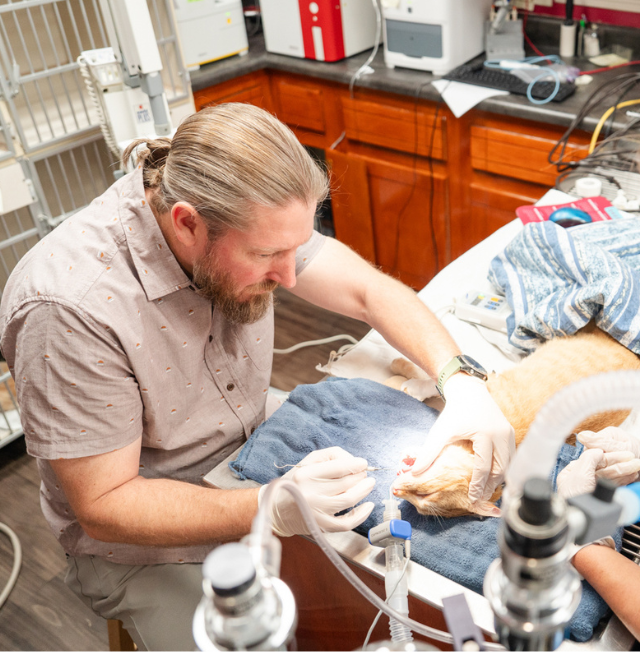
Every anesthetic procedure is closely supervised by our experienced and compassionate veterinary team. We use state-of-the-art monitoring equipment to track your pet’s vital signs in real time, including:
-
Heart rate and rhythm
-
Respiratory rate
-
Oxygen levels
-
Blood pressure
-
Body temperature
Our dedicated team remains by your pet’s side before, during, and after the procedure to ensure a safe and smooth recovery.
Advanced Anesthesia for Peace of Mind
We utilize the safest and most effective anesthetic agents available, including propofol and isoflurane. These modern anesthetics allow for smooth induction and recovery, making them ideal for pets of all ages, particularly senior or high-risk patients.
FAQs
What types of procedures might require the use of anesthesia?
Anesthesia is commonly used for a variety of veterinary procedures to ensure patient comfort and cooperation. This includes most surgical operations, professional dental cleanings, and certain types of diagnostic imaging where a pet must remain perfectly still.
Why is monitoring important during an anesthetic procedure?
Monitoring allows the veterinary team to track a pet’s vital signs in real time. By observing metrics like heart rate, respiratory rate, and oxygen levels, the team can stay informed about the pet’s status throughout the entire process.
Are there different types of anesthetic agents used in veterinary medicine?
Yes. Depending on the specific needs of the patient, veterinarians may use injectable anesthetics, gas anesthetics, or a combination of both. Common examples include agents like propofol and isoflurane.
Does the veterinary team stay with the pet after the procedure is finished?
Standard veterinary protocol involves supervised recovery. A dedicated team member typically monitors the pet as they wake up from anesthesia to help ensure the transition is as smooth and comfortable as possible.
Are older pets able to undergo procedures involving anesthesia?
Yes, pets of all ages, including seniors, can often safely undergo anesthesia. Veterinary teams typically perform a pre-anesthetic evaluation to customize the approach for older or high-risk patients, focusing on their specific health requirements to maintain comfort and safety.