

Laparoscopic Spay in Rome, GA
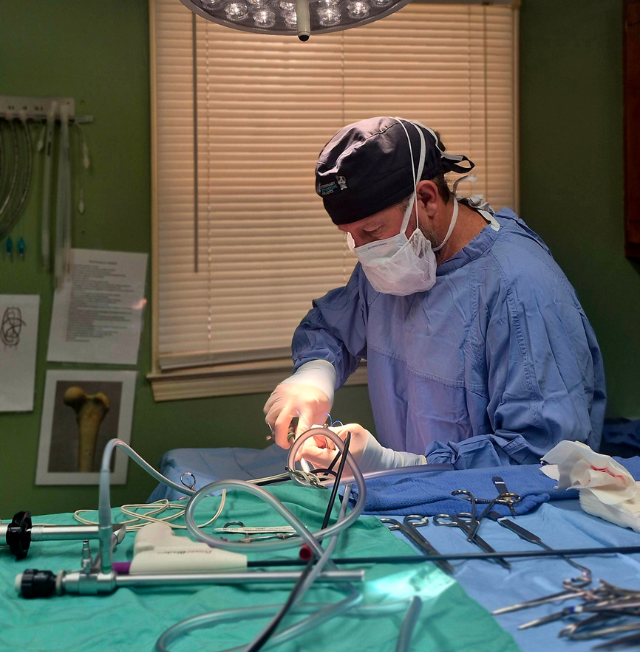
At Animal Medical Center of Rome, we are proud to offer advanced laparoscopic spay surgery as a safer, less invasive alternative to traditional spay procedures. Using small incisions and specialized surgical equipment, this technique allows our veterinarians to perform the procedure with greater precision and reduced trauma to surrounding tissues.
Our Commitment to Safety
At Animal Medical Center of Rome, your pet’s safety and comfort are always our top priorities. Every laparoscopic spay includes a thorough pre-anesthetic exam and lab work to assess your pet’s health, individualized anesthesia tailored to their specific needs, and continuous monitoring of vital signs throughout the procedure. We also provide comprehensive pain management before, during, and after surgery to ensure a smooth, stress-free recovery. By choosing a laparoscopic spay in Rome, GA, you’re giving your pet a modern surgical option that promotes quicker healing, less discomfort, and long-term wellness.
Benefits of a Laparoscopic Spay
Pets who undergo laparoscopic spay surgery typically experience:
-
Smaller incisions and reduced risk of complications
-
Less pain during recovery
-
Shorter healing time compared to traditional spay surgery
-
Faster return to normal activity levels
FAQs
What is a laparoscopic spay?
A laparoscopic spay is a modern surgical technique used to sterilize female pets. Unlike a traditional “open” spay, this method uses a small camera and specialized instruments to remove the ovaries through tiny incisions, allowing the veterinarian to see the internal structures on a high-definition monitor.
How does a laparoscopic spay differ from a traditional spay?
In a traditional spay, a larger incision is made to allow the surgeon to manually find and remove the reproductive organs. In a laparoscopic procedure, the incisions are much smaller (often only a few millimeters), and the surgeon uses video guidance to perform the procedure with minimal handling of the internal tissues.
Why is carbon dioxide used during the procedure?
During laparoscopic surgery, a small amount of medical-grade carbon dioxide is used to gently inflate the abdomen. This creates a “workspace” for the veterinarian, providing a clear view of the organs and ensuring there is enough room to safely move the surgical instruments.
Will my pet have stitches after a laparoscopic procedure?
Yes, though the incisions are significantly smaller than those of a traditional surgery, they are still closed to ensure proper healing. These may be closed with surgical glue, staples, or small sutures, depending on the specific needs of the patient.
Is laparoscopic surgery common in veterinary medicine?
While traditional surgery remains the standard for many clinics, laparoscopic techniques are increasingly common in veterinary medicine. They are used for various procedures, including spays, biopsies, and certain abdominal explorations, mirroring the minimally invasive “keyhole” surgeries commonly performed in human medicine.